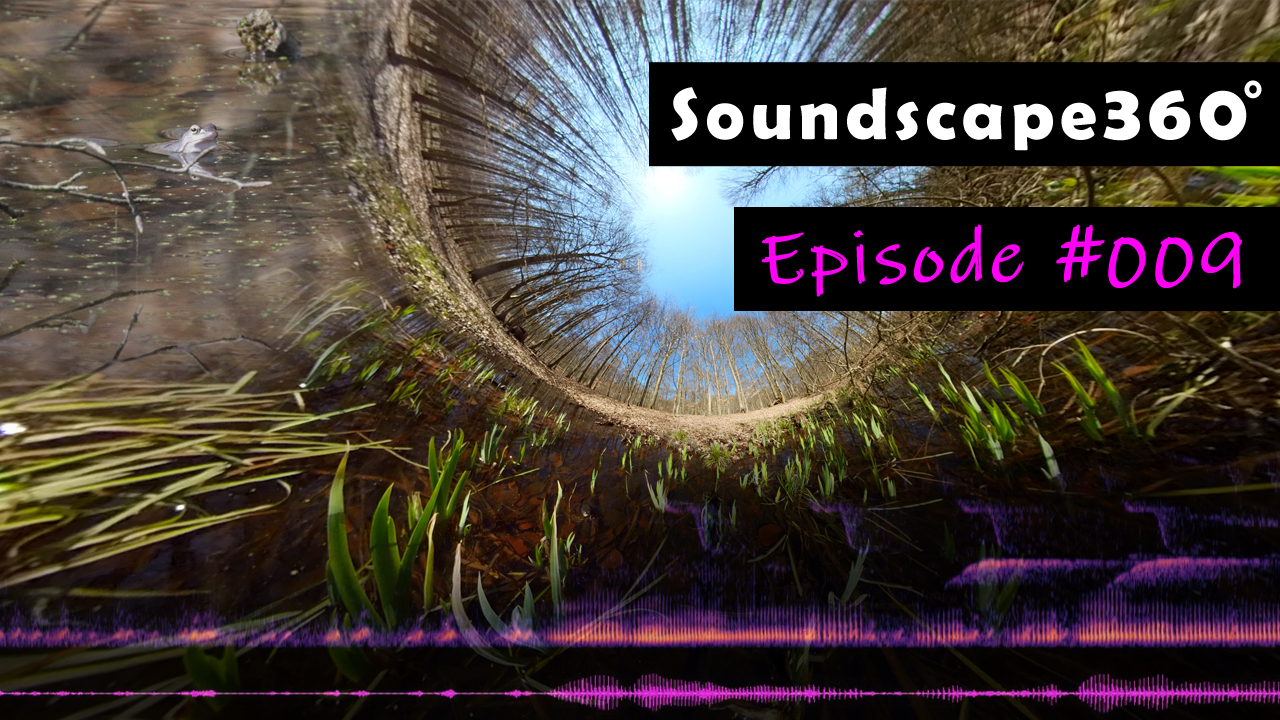
It is early spring and the first warm days of the season arrived. At noontime the temperatures reach almost 20°C for the first time of the year. Wind blows through the trees. The birds already slowed down their daily singing activity, but in a small and shallow and sunlit water pool amphibians become active. It takes a couple of minutes until the first Moor and Common Frogs start calling. Splashing sound comes from fighting and spawning. Other clicking sounds might come from water insects.
The sounds of birds, mammals, amphibians, insects or anything that is human-related are annotated in the spectrogram below and include:
Blue Tit – Blaumeise – Cyanistes caeruleus
Stock Dove – Hohltaube – Columba oenas
Common Chaffinch – Buchfink – Fringilla coelebs
Great Tit – Kohlmeise – Parus major
Black Woodpecker – Schwarzspecht – Dryocopus martius
Eurasian Treecreeper – Waldbaumläufer – Certhia famillaris
Eurasian Jay – Eichelhäher – Garrulus glandarius
European Robin – Rotkehlchen – Erithacus rubecula
Eurasian Nuthatch – Kleiber – Sitta europaea
Common Raven – Kolkrabe – Corvus corax
Great Spotted Woodpecker – Buntspecht – Dendrocopos major
Middle Spotted Woodpecker – Mittelspecht – Leiopicus medius
Moor Frog – Moorfrosch – Rana arvalis
Common Frog – Grasfrosch – Rana temporaria
Hymenoptera sp. – Hautflügler sp. – Hymenoptera sp.
 Soundscape360°